


To anchor the development goal of "a top-tier Chinese business school that bridges China and the world and is driven by science and technology," to address the key issues of discipline development, talent cultivation and brand building, and to pool the wisdom of academia, industry and alumni to empower high-quality development, on the morning of November 29, the meeting of the Strategic Advisory Committee of the School of Business and Management of Shanghai International Studies University (SISU SBM) was held at the International Education Center on the Songjiang Campus. Convened at the critical juncture where the "14th Five-Year Plan" was drawing to a close and the "15th Five-Year Plan" was being planned, the meeting was designed to systematically review development experience, scientifically assess future trends, and lay a solid foundation and blueprint for the School to achieve leapfrog development in the new phase.
University leaders, heads of the University’s Department of Research Management, Office of Planning and Comprehensive Reform, and Graduate School, members of the School’s leadership team, department heads and discipline leaders, top discipline experts from universities such as Shanghai Jiao Tong University, Fudan University and ShanghaiTech University, as well as enterprise representatives and distinguished alumni gathered together to offer advice and suggestions for the School’s development. The meeting was presided over by Wang Haifeng, Vice Dean of the School of Business and Management.
1.Welcome Address by Jin Hui, Assistant President of Shanghai International Studies University
Jin Hui, Assistant President of Shanghai International Studies University, delivered the welcome address. On behalf of the university, she extended a warm welcome and gratitude to all committee members, guests and alumni. She noted that the global landscape is undergoing profound changes, and the acceleration of scientific, technological and industrial transformation presents both challenges and opportunities for business education. As an important base for cultivating composite, international management talent, the School’s development bears on the implementation of the university’s strategy and the cultivation of elite talent. She said that the Strategic Advisory Committee is a key arrangement by which the School anchors itself in the present and looks toward the future, and she looked forward to the committee members offering advice on topics such as strategic planning, curriculum systems and school–enterprise collaboration, drawing on their frontier vision and practical experience to help the School reform and upgrade. She expressed confidence that with the members’ support, the School will clarify its direction, enhance its strength and contribute to the university’s "Double First-Class" construction.
2.Strategic Development Report by Dean Yang Xiaolan
In the strategic development report session, Dean Yang Xiaolan, under the theme "Four Decades, A New Journey: Strategy Leads Development," analyzed the School’s development landscape through internal and external environment analysis based on its vision and mission. The School has three core strengths: the "bridging China and the world" capability endowed by SISU’s multilingual background, the frontier support of the Key Laboratory of Brain–Computer Collaborative Information Behavior in "technology leadership," and a high-caliber, internationalized and youthful faculty team. At the same time, the School faces key challenges: its brand is still in a growth stage with room for influence to grow, the deep integration of frontier technology with management science is difficult, and its foundation in science and engineering disciplines is relatively weak, creating structural pressure in responding to the new round of scientific and technological change. Building on this, the School will seize the major opportunities brought by the new technological revolution and national strategic demands, actively respond to the increasingly fierce competition among domestic and international business schools, and clarify its strategic directions in four major areas for 2025–2030: talent cultivation, research innovation, international exchange and social influence.
3.Remarks by Discipline Experts
In the expert discussion session, the guests engaged in in-depth exchange around three topics: discipline positioning, industry–education integration, and alumni ecosystem. Discipline experts focused on strategic implementation and distinctive innovation. Professor Wang Fanghua, former Dean of the Antai College of Economics and Management at Shanghai Jiao Tong University, pointed out that the School needs to clarify an international management positioning that "connects with the world" and push "technology leadership" from planning to practice, with supporting measures such as faculty structure, teaching methods, curriculum design and assessment systems. Professor Yuan Zhigang, former Dean of the School of Economics at Fudan University, suggested that the discipline focus on science and technology finance and fintech to cultivate composite talent, while closely responding to enterprises’ going-global needs, leveraging language advantages to strengthen school–enterprise cooperation, and integrating AI applications into the entire talent cultivation chain. Professor Mao Jiye, Dean of the School of Entrepreneurship and Management at ShanghaiTech University, spoke highly of the School’s strategic report, emphasized the long-term value of international accreditation for the School and the University, and suggested promoting the resources of the Shanghai and Ministry of Education Key Laboratory of Brain–Computer Collaborative Information Behavior to radiate across the business administration discipline and the entire university, deepening the integration of technology and management through assessment and incentive mechanisms, and supplementing and enhancing the faculty through part-time faculty and alumni courses, so that undergraduate and MBA programs align with the School’s distinctive resources and research focuses on artificial intelligence and neuroscience to form an agglomeration effect.
4.Remarks by Industry Experts and Alumni Representatives
In the industry expert and alumni discussion session, guests based on industrial practice provided a "practical perspective" for talent cultivation and industry–university–research cooperation: Bai Yong, Cross-Border CEO of Guolian Co.; Guo Hongwei, Senior Vice President of Hande Information Technology Co., Ltd.; Liu Ting, General Manager of Baozun’s New Channel Business Division and General Manager of Shanghai Kunxin E-Commerce; Wang Xin, Operations Director of Hejun Group’s Shanghai Headquarters; Wu Haoze, Dean of the Lantong AI Academy and co-founder of DeepBlue Technology; Yang Lijun, a teacher at Shanghai Xiangming Middle School; and Zhang Xin, Assistant Vice President of the Business Division of Nanhua Futures Co., Ltd., respectively offered suggestions from the perspectives of management consulting, enterprise going global, cross-border supply chains and enterprise digital transformation, recommending that the School deepen research cooperation with enterprises, jointly tackle industrial pain points, and optimize internship and employment matching mechanisms for graduates to achieve "resonance between talent cultivation and industrial demand." Distinguished alumni representatives also suggested, based on their own career development experiences, that the School strengthen alumni network building and establish an "alumni mentor" platform to provide career planning guidance and resource support for current students.
5.Remarks by On-Campus Experts
In the on-campus expert remarks session, Jin Hui, Assistant President of Shanghai International Studies University; Pan Mingwei, Director of the Department of Research Management; Sun Jian, Director of the Office of Planning and Comprehensive Reform; and Luo Hua, Deputy Dean of the Graduate School, drawing on the university’s development planning and departmental work, focused closely on the School’s strategic needs and offered suggestions from the dimensions of resource coordination, mechanism reform and talent cultivation, consolidating the combined force of university–school collaborative development.
6.Ceremony for Appointing Strategic Advisory Committee Members – Discipline Experts
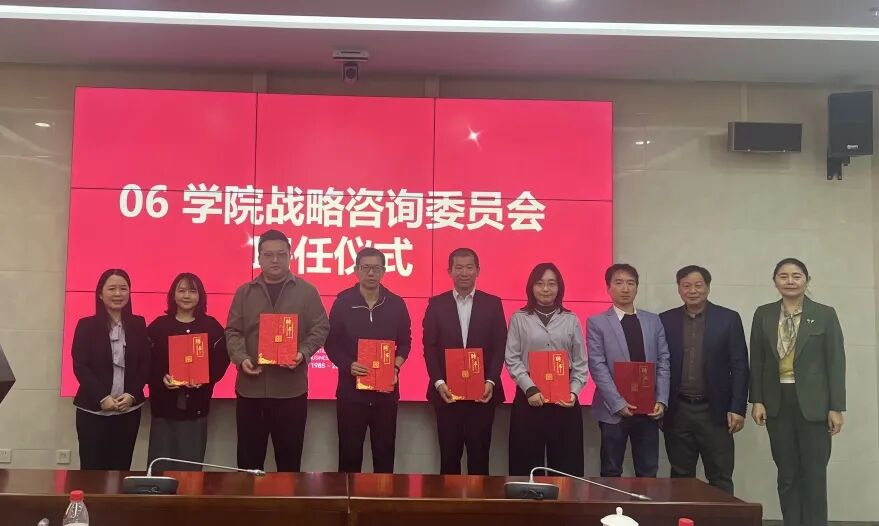
Figure 1: Appointment ceremony for Strategic Advisory Committee members – discipline experts
7.Ceremony for Appointing Strategic Advisory Committee Members – Industry and Alumni
In the appointment ceremony session, Assistant President Jin Hui and Dean Yang Xiaolan presented appointment letters to the appointed discipline experts, industry experts and distinguished alumni, formally appointing them as members of the School’s Strategic Advisory Committee. The appointed members expressed that they will actively fulfill their duties, continue to provide intellectual support for the School’s development, and promote deep collaboration between the School and academia and industry.
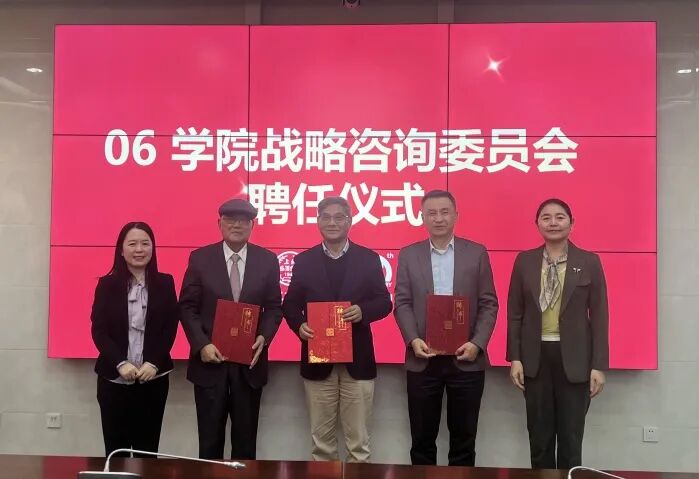
Figure 2: Appointment ceremony for Strategic Advisory Committee members – industry experts and alumni
Xu Yong, Party Secretary of the School of Business and Management, delivered the concluding remarks. He said that the meeting pooled wisdom from multiple parties and clarified the School’s development direction and work ideas. The School will carefully sort through the opinions and suggestions of all committee members and incorporate them into the optimization of its "15th Five-Year Plan" and the formulation of future development strategies, while also looking forward to establishing a long-term communication mechanism with the members, jointly advancing the School’s business administration education to a new level, actively joining the ranks of cultivating outstanding internationally oriented talent, and contributing to building a strong socialist education country with Chinese characteristics.
8.Concluding Remarks by Xu Yong, Party Secretary of the School of Business and Management
The successful convening of this Strategic Advisory Committee meeting has pooled wisdom from multiple parties and clarified the development path for SISU SBM. Going forward, the School will take this as an opportunity to deepen its strategic layout, strengthen its distinctive advantages, proactively align with national strategic demands, serve economic and social development, strive to cultivate more high-quality business administration talent that meets the needs of global economic development, and contribute "SISU strength" to promoting innovation in business administration education and high-quality industrial development in China.

