


From April 11 to 12, 2026, the "AI-Empowered Business Administration Practice Training Camp" of the School of Business and Management was successfully held in the Artificial Intelligence and Data Application Teaching Center, Room 126, West Building of the Second Teaching Building on the Songjiang Campus. The training camp was hosted by the Teaching Office of the School of Business and Management and co-organized by the AI Data Engineering Center and the Artificial Intelligence and Data Application Teaching Center. It was open to all students of the School and undergraduate students of various majors interested in AI applications. The course totaled 16 class hours and was delivered through a combination of theoretical explanation and hands-on experimentation.
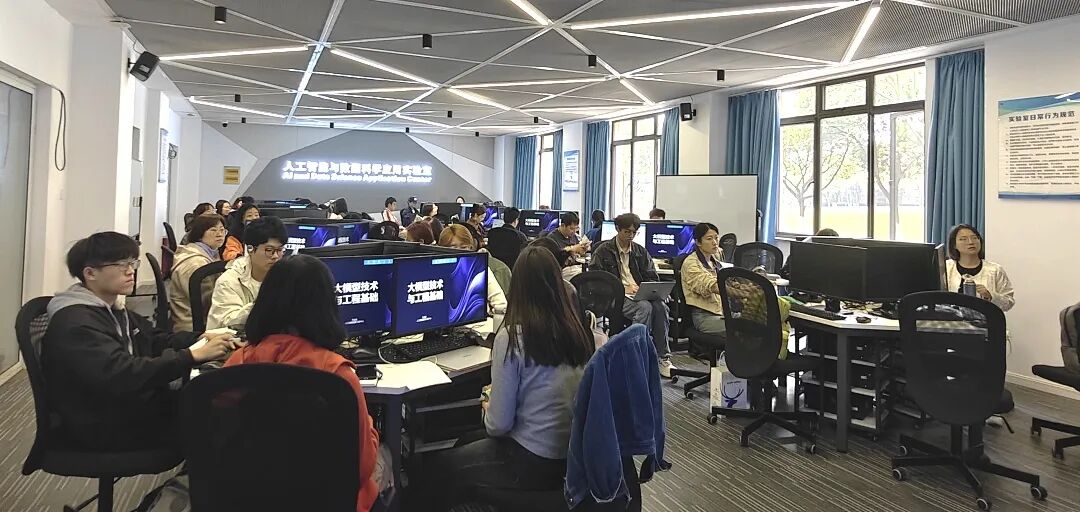
Figure 1: The Artificial Intelligence and Data Application Teaching Center during hands-on training
The training camp was taught by Yu Zhengwang, Director of the Technology Department of the AI Data Engineering Center and a full-stack AI engineer. In the training camp, Mr. Yu first started from the basic concept of tokens, explaining to the trainees the fundamental way large language models understand and process language, and, around core elements such as prompt, context, rules and skills, helped the trainees build a thinking framework for working efficiently with AI tools. On this basis, Mr. Yu focused on introducing the installation, configuration and use of built-in tools of Trae, an AI programming tool, leading the trainees to set up a development environment from scratch and to achieve code generation and webpage construction through natural-language instructions, so that the trainees truly experienced that, even without any programming foundation, one can still complete real project development with the help of AI tools. Subsequently, the course introduced content on MCP and skills, further expanding the trainees’ understanding of the collaboration and scheduling mechanisms of AI tools, and, on this basis, guided the trainees to try to build a relatively complex integrated project, applying what they had learned comprehensively and initially establishing AI engineering thinking.
On the second day, the course went further on the basis of the previous day’s learning outcomes. Mr. Yu led the trainees to systematically learn the core concepts and hands-on techniques of AI coding, further strengthening their ability to independently complete project development using AI. Afterwards, the course focused on the OpenClaw platform, explaining in detail its functional architecture and core technologies, and, after completing the installation and configuration, carried out a full hands-on drill combined with typical task scenarios. The trainees personally experienced the entire process of intelligent agents autonomously planning, calling tools and executing tasks, and truly felt the powerful potential of highly autonomous intelligent agents in handling complex tasks. The course also gave special explanations on the security boundaries and precautions of agent use, guiding the trainees to establish a responsible awareness of AI use in practical exploration.
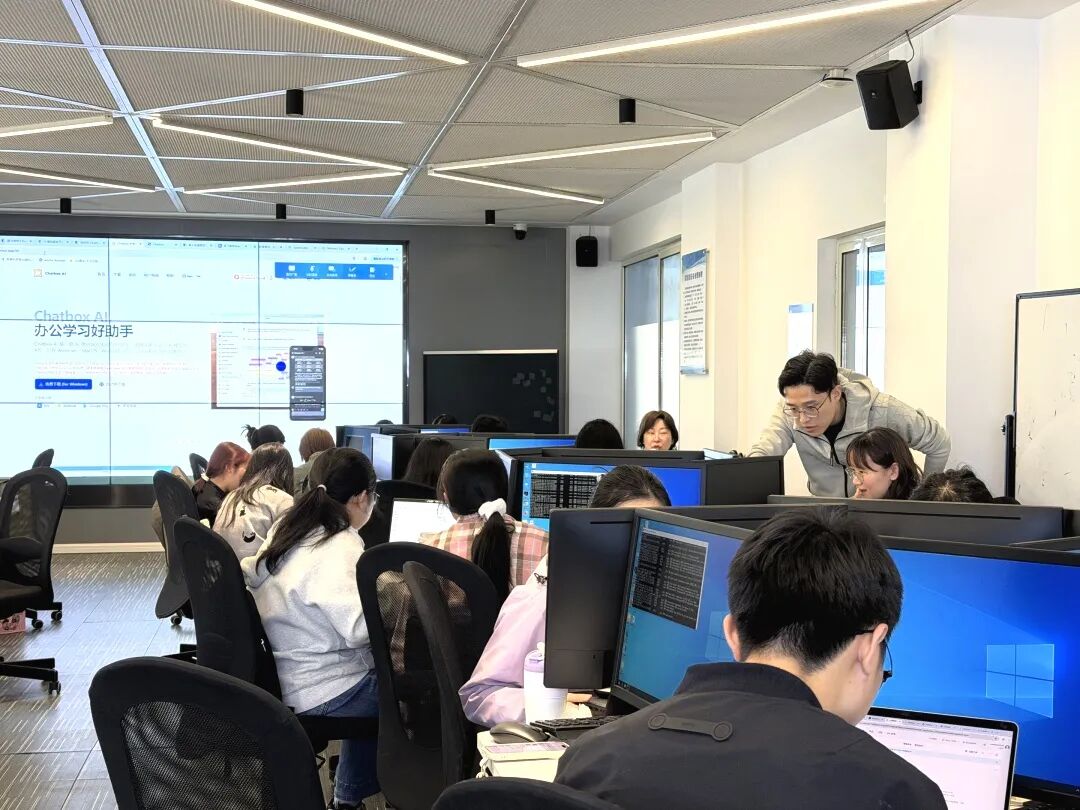
Figure 2: The computer training classroom, with the instructor guiding trainees
In the Q&A and interaction sessions of the two-day course, the trainees participated enthusiastically, and Mr. Yu gave patient and detailed answers. At the end of the course, the trainees completed the construction of their own personalized intelligent agents. The trainees said that the training camp not only enabled them to truly master practical AI engineering skills, but also helped them build systematic AI engineering thinking, and made them feel the enhancement of core competitiveness brought by the interdisciplinary integration of business and AI. The training camp came to a successful conclusion.
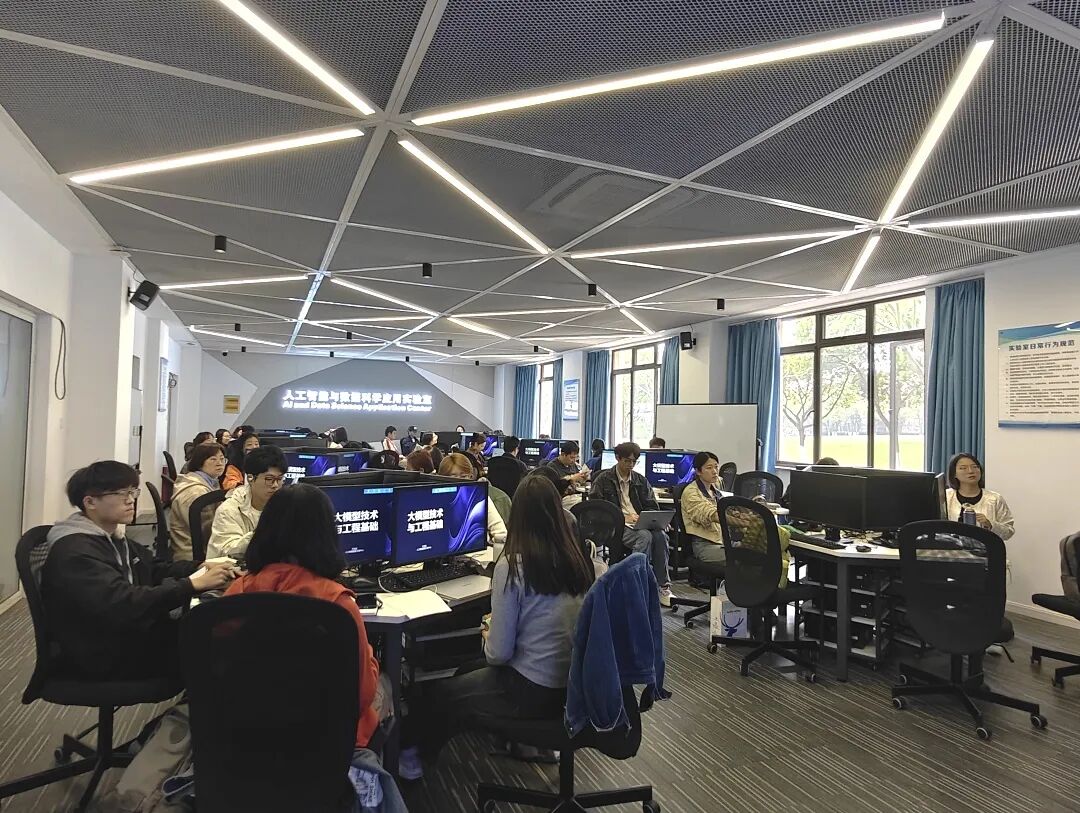
Figure 3: Trainees studying at workstations in the AI and Data Science Application Laboratory
At a time when AI is comprehensively empowering business management, mastering AI tools, completing project development with the help of AI programming, and building dedicated intelligent agents have become the most competitive core skills for students in the field of business administration. This training camp was designed precisely to respond to this demand of the times, helping business students, grounded in professional scenarios, to systematically improve their AI engineering capabilities from basics to advanced levels.

