


On May 20, the SISU MBA program invited Professor Tony Fang of the Stockholm University School of Business in Sweden to deliver an in-depth lecture for faculty and students entitled "Enterprise Going Global and Global Localization Strategy in Emerging Markets." Drawing on his academic research and cross-cultural management experience, Professor Fang delivered a brilliant presentation on topics such as the evolution of enterprise internationalization theory, the classic case of Geely’s acquisition of Volvo, geopolitical challenges and pathways for disruptive research. The lecture was moderated by Professor Steve Kulich, and attended by Professor Luo Lijuan, Director of the MBA Center; Zhou Jinyan, Associate Research Fellow of the Shanghai Institute for Global Governance and Regional Studies; and MBA faculty and student representatives.

Figure 1: The SISU MBA distinguished faculty salon discussion (Luo Lijuan, Tony Fang, Steve Kulich and Zhou Jinyan)
1.01 The Classic Theory of Enterprise Internationalization and Its Evolution
The Incremental Logic of the Uppsala Model
At the start of the lecture, Professor Fang systematically reviewed the classic theoretical framework of enterprise internationalization. The Uppsala model, proposed by Johanson and Vahlne of Uppsala University in Sweden in the 1970s, emphasizes that the psychic distance brought by cultural differences is the core obstacle to enterprise internationalization. The model recommends that enterprises adopt an incremental internationalization strategy: first export to culturally similar markets to accumulate experience, and then gradually carry out direct investment such as greenfield investment, proceeding steadily and surely.
The Disruption of the Born-Global Model
Entering the mid-1990s, the proliferation of the Internet gave rise to the "born-global model." This model holds that in the Internet age, a startup can position itself as a global company from its very first day, without the need for incremental accumulation. This theory constituted a certain degree of disruption to the Uppsala model.
The Integrative Innovation of the Yin-Yang Fusion Model
Drawing on Eastern yin-yang thinking, Professor Fang proposed that the two models are not a simple black-and-white dichotomy. In corporate practice, the two theories can be combined: integrating the Uppsala model and the born-global model to form a "parachuting internationalization" model, providing enterprises with a more flexible framework for theoretical analysis.
2.02 Geely’s Acquisition of Volvo: A Model of Cross-Cultural Integration
01 The Successful Practice of Light-Touch Management
Professor Fang took Geely’s acquisition of Volvo as a typical case for in-depth analysis. After the acquisition, Geely did not fully merge Volvo; instead, it kept Volvo’s headquarters in Gothenburg, Sweden, maintaining its independent operational status. Adopting a "light-touch management" strategy, it did not interfere with specific business operations and gave the R&D and design teams great autonomy. This strategy, akin to "governing by doing nothing that goes against nature," achieved excellent results.
02 The Dual Gains of Performance and Cultural Integration
Data show that before the acquisition, Volvo’s annual output never exceeded 300,000 vehicles, while after the acquisition its annual output surpassed 500,000 vehicles. Ten years after the acquisition, Volvo added 4,000 research-related jobs, and local society gave a positive assessment of the acquisition. The two sides developed a shared technology platform and established a cooperative technology management company. Volvo also launched a three-seat luxury model inspired by the Chinese market, blending Nordic minimalist design with China’s luxury demands, which won market recognition. This case proves that different cultures can achieve symbiosis and complementarity rather than a zero-sum game.
3.03 New Challenges Facing Enterprises Going Global
Geopolitics: The Shift of the Core Contradiction
Professor Fang pointed out that in 2018 China began systematic reviews of US-invested enterprises operating in China, and in 2019 the United States issued an executive order targeting Huawei, marking a fundamental change in the global academic environment. Enterprise going global is no longer merely a matter of cultural differences; political frictions now play a greater role, requiring adaptation to new rules. Professor Fang is currently writing a new article proposing that "the core of international business is policy," and that geopolitical policy changes have replaced cultural differences as the core contradiction of enterprise internationalization today.
Digital Sovereignty: The Failure of the Global IT Coordination Model
Under the influence of geopolitics, digital technology trajectories have split, and the traditional model of headquarters coordinating global IT and supply chains no longer applies. In June 2023, Sequoia Capital announced a split, with its China and India operations becoming independent; the split was completed in March 2024, forming an independent operating model similar to a Swiss law firm. This reflects the new organizational forms emerging in the context of globalization.
Climate Change: The Ecological Crisis Forcing Business Model Reconstruction
Professor Fang mentioned that seven of the Earth’s nine planetary boundaries have already been transgressed, and that ecological crises such as climate change pose challenges to traditional corporate growth models. Corporate social responsibility cannot be used merely as a marketing tool; it needs to be truly implemented.
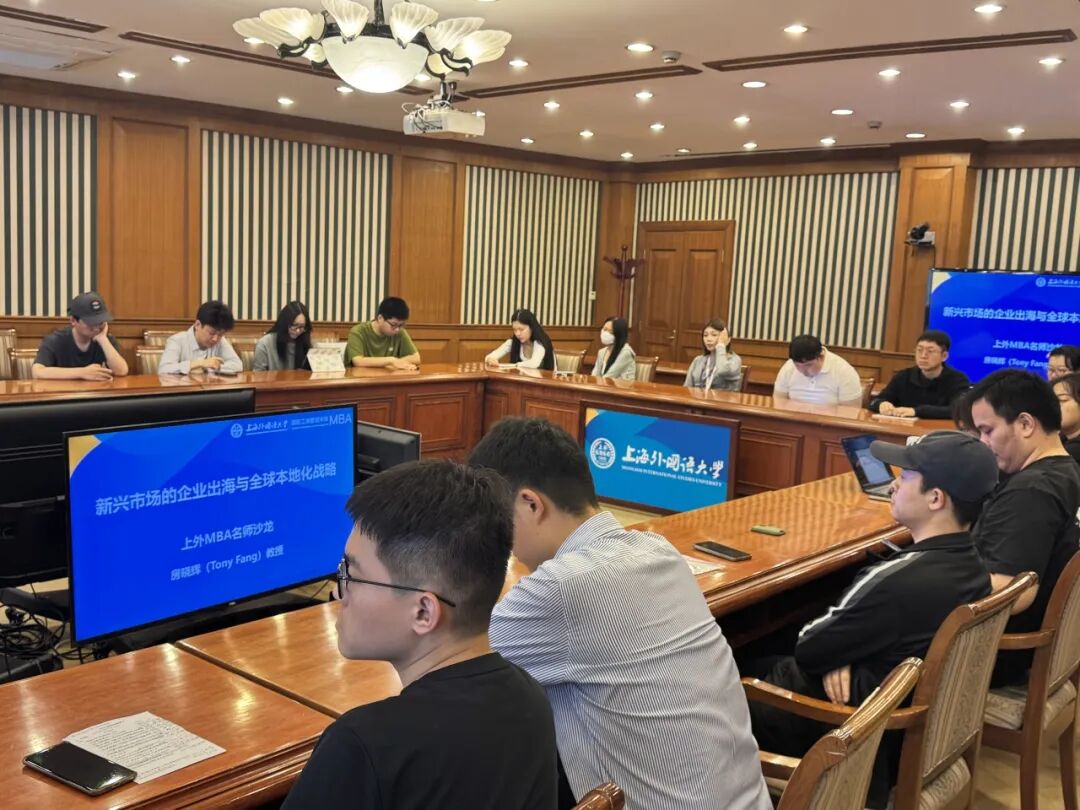
Figure 2: The salon in progress with participants around the table
4.04 The Necessity and Pathways of Disruptive Research
Nature’s Data Revealing the Academic Predicament
Citing statistical data from Nature, Professor Fang pointed out that since World War II, the proportion of disruptive research has been declining, with most research being refinements and improvements of existing knowledge — a trend unfavorable to academic development.
The Publication Patterns of Disruptive Research
Regarding how disruptive research enters top journals, Professor Fang shared the patterns of publication pathways: top journals rarely publish disruptive cutting-edge content, and authors usually first publish their ideas in secondary journals or book chapters, and only after validation are invited to publish in top journals. A typical case is Gary Knight’s highway automobile theory, first published in a book chapter in 1994, published in a journal in 2004, and not recognized by academia until 2014 — a process taking 20 years in total.
The New Direction of Journal Reform
As a journal editor-in-chief, Professor Fang shared the latest reform ideas: after the new editor-in-chief took office in January 2023, an editorial was published proposing a return to the multidisciplinary founding roots, focusing on global issues rather than only emerging markets. The review criteria were adjusted with two new review dimensions added, requiring papers to clarify their relevance to social progress at the topic-selection stage, rather than only appending practical significance at the end of the article. The research logic has shifted from the traditional filling of literature gaps to opening new windows into new fields, conducting phenomenon-driven research on the issues of the era.
5.05 Personal Reflections on Academic Growth
The Attempt to Reconstruct Social Science with Eastern Philosophy
Professor Fang proposed using the Chinese yin-yang model to understand social problems. He pointed out that Western democracy is a single-choice system of binary opposition, leading to endless social fragmentation; the Chinese yin-yang model can support proportional multi-choice, forcing different parties to cooperate and resolve the fragmentation problem.
The Long-Termist Academic Values
At the end of the lecture, Professor Fang concluded with the inspiration of the Sagrada Familia Basilica in Barcelona: it has been 144 years since construction began, and although the designer passed away in 1926, the project remains unfinished to this day — yet its influence will endure. Doing research is a heroic pilgrimage that requires courage and long-termist perseverance.

Figure 3: The four panelists in discussion
6.Conclusion
This lecture not only provided a frontier perspective for academic research in the field of international business, but also brought profound inspiration to the practice of enterprises going global. Against the backdrop of great changes unseen in a century, Chinese scholars need to ground themselves in the issues of the era and conduct breakthrough research, reconstructing social science theory with Eastern wisdom and proposing innovative theories in the field of international business. As Professor Fang said: "Pursuing scholarship is a scholar’s presence in a great era, similar to a long pilgrimage — even if one does not reach the destination, the process itself holds value."
7.Memorable Quotes
— "There is yin and yang in every culture; culture cannot be simply divided into collectivism or individualism, for every society has two sides."
— "Cross-cultural integration is not a zero-sum game in which one side devours the other; the symbiosis of complementary yin and yang can generate more creativity."
— "Reading literature is like practicing martial arts — just as singing and playing sports require daily training, it not only accumulates knowledge but also hones your academic ability."
— "All the experiences in life are your wealth; even the table-tennis training of your early years can help your academic research."
— "A truly good article endures for a long time, perhaps across this generation and the next; it depends on the weight and quality of the article itself."
— "Research is a hero’s pilgrimage, a sacrifice, a long journey."

