


"Hundreds of Teams and Thousands of Enterprises" in Progress: How Chinese Products Reach the World — SISU Research Team Explores the Full Chain of Chinese Enterprises Going Global
Shanghai International Studies University · School of Business and Management
In response to the national strategic deployment to advance high-level opening-up and support enterprises in going global, the School of Business and Management (SBM) at Shanghai International Studies University (SISU) organized a research team to visit companies along the complete chain — from factories and cross-border e-commerce platforms to sales service providers and overseas sellers — completing a study of how Chinese goods reach the world.
Led by Guohua Liu, Associate Professor and Director of the Department of Public Relations, the study examined the choice of going-global pathways, platform rules, overseas warehouse and supply chain development, cross-cultural management, compliance, and talent team building. The team also toured companies' operations departments and production workshops.
1.Hongji Group: An Overseas Footprint Should Be Like "Spring Rain," with Respect and Goodwill First
The team visited Hongji Group, which has extended its factories overseas. Founded in Jiading, Shanghai, in 2000, the group produces automotive fasteners and stampings. It acquired its first plant in Mexico in 2015, merged with an upstream special steel enterprise in 2021 to integrate the raw-material supply chain, and completed the acquisition of a plant in Detroit, the United States, in 2025. The team held in-depth discussions with Chairman Xiangjun Xie, Director Zijuan Zhao, and other senior executives, and toured the production workshop.
Reviewing the company's more than two decades of history and its three overseas acquisitions, Xie explained that the decision to build plants in Mexico and the United States stemmed from the already considerable scale of China's exports: to keep operations stable, the company needed a multi-location footprint. As for the trend of industrial reshoring in North America, he did not rely solely on macro data, but caught the signal from feedback of frontline customers.
Hongji completed its overseas layout through acquisitions, but post-merger integration was no easy task. Xie summed up the rhythm of integration with two phrases of his own. The first is the "duck theory": "A duck appears motionless above the water, yet its webbed feet are paddling all the while beneath the surface." The second is the "spring rain theory": "Be like spring rain, not like a summer downpour." He said that what matters most in the early stage of a merger is respect and goodwill, and that post-merger integration is essentially a test of a company's cross-cultural adaptability. Only through cultural respect and integration can a company truly take root overseas and go further.
The team also learned that Hongji plans to train, three years in advance, a pool of mid-level and grassroots staff who can be posted abroad, and hopes to work with universities to incorporate industry terminology into foreign-language teaching from the students' campus years, so as to strengthen their ability to communicate fluently in a foreign language in industry settings.
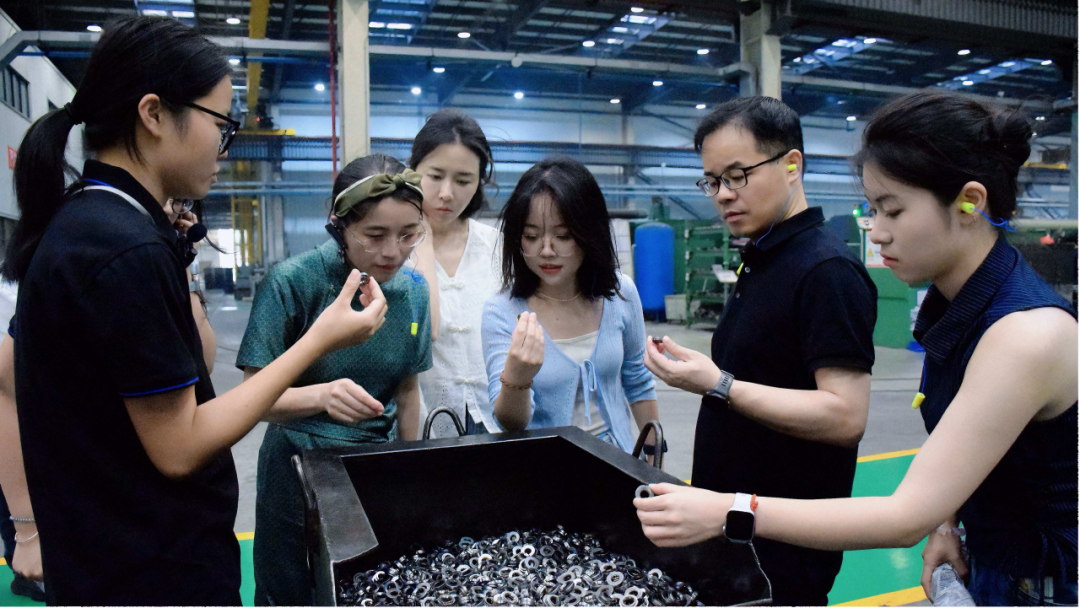
Figure 1. Members of the research team inspect automotive fasteners on the production line at Hongji Group.
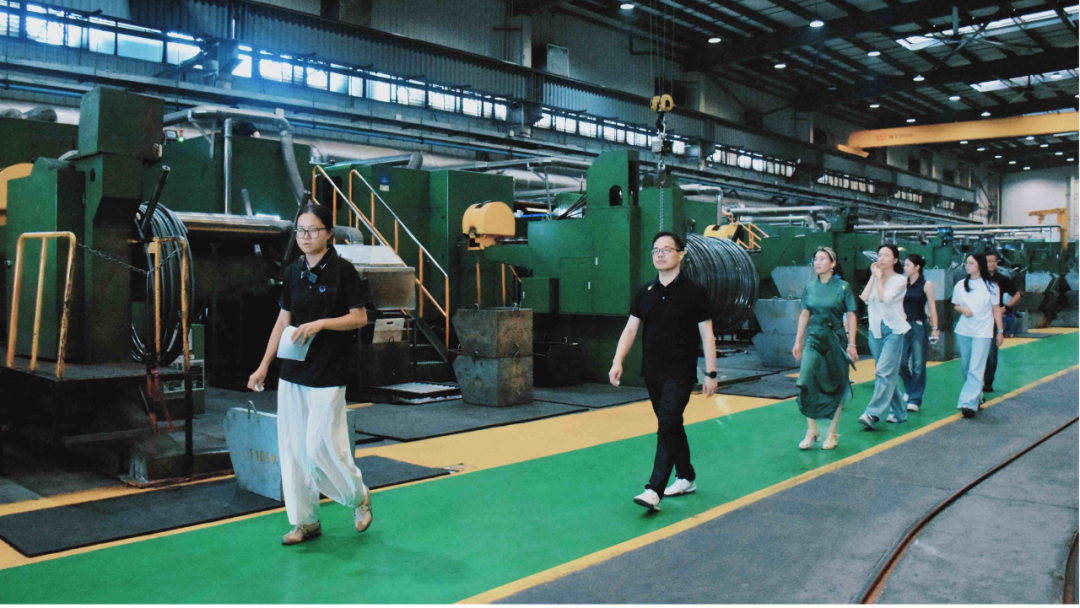
Figure 2. The team tours a manufacturing workshop.
2.eBay: The Biggest Bottleneck in Cross-Border Business Is the Lack of "Multilingual+" Composite Talent
The team visited eBay, the well-known global cross-border e-commerce platform, and spoke with General Manager Tao Pang, who oversees category management and merchant recruitment, about the platform's cross-border business history, cross-border livestreaming, and the circular economy.
Pang introduced that eBay's China team focuses on cross-border business, and that its largest category by transaction volume is precisely the auto-parts industry in which companies such as Hongji operate. He described the evolution of China's cross-border e-commerce as four stages: selling goods, selling products, selling brands, and selling differentiation. It was the successive establishment of cross-border direct mail and overseas warehouse systems that enabled the platform's categories to expand from light, small items to heavy, large items such as auto parts and home goods.
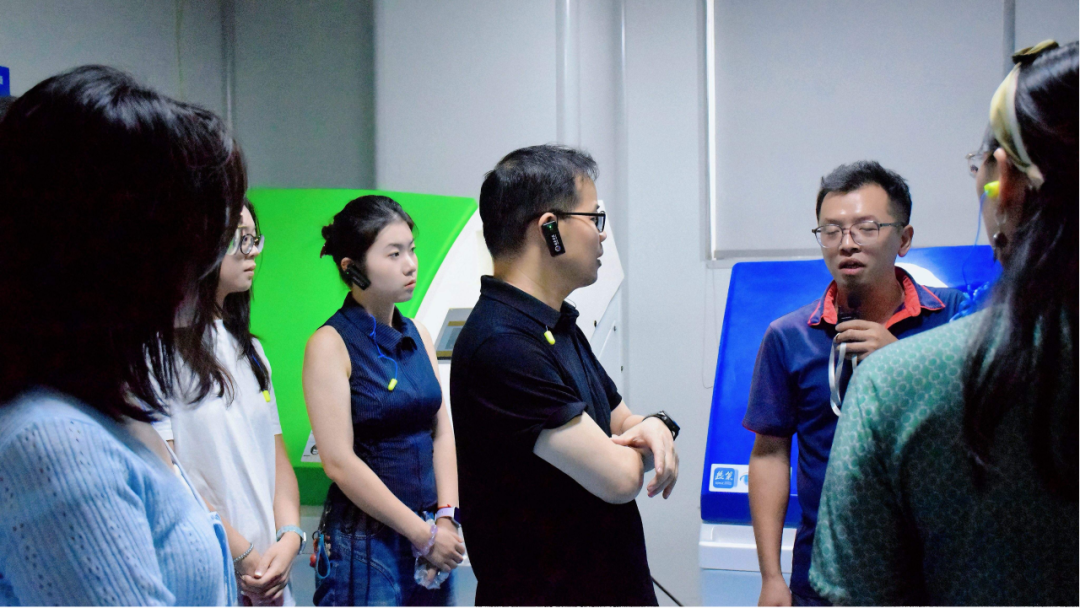
Figure 3. A company representative briefs the research team during a site visit.
3.Yiyunying: Breaking the "Ship" Small Factories Cannot Afford into Rentable "Cabins"
The team visited the Songjiang branch of Yiyunying in Shanghai. A foreign-trade service provider transformed from a traditional trading company, it settled in Shanghai at the end of 2025. Wang Yanmei, head of the Shanghai branch, and Yang Qian, director of government relations, shared the company's transformation journey and overseas warehouse operations with the team.
The team learned that many small and medium-sized enterprises (SMEs) do not lack the will to go global; rather, every capability required for going global has to be built from scratch, which is hard to accomplish on their own and thus holds back their pace. To address this pain point, Yiyunying has broken down the methods it honed over years in foreign trade into rentable services — four modules covering target-market data analysis, foreign-trade talent training, overseas omnichannel marketing, and overseas warehouse operations — helping SMEs "borrow a ship to go global." Its overseas warehouses are more than storage facilities: combined with local ground promotion, they have become sample showrooms, turning the inspection step that once depended on trade fairs into a year-round on-site display.
While touring the operations department, the team noted that the company uses AI-assisted methods in real-time communication with buyers, yet still keeps manual review in the multilingual content publishing step to avoid misunderstandings in cross-cultural communication.
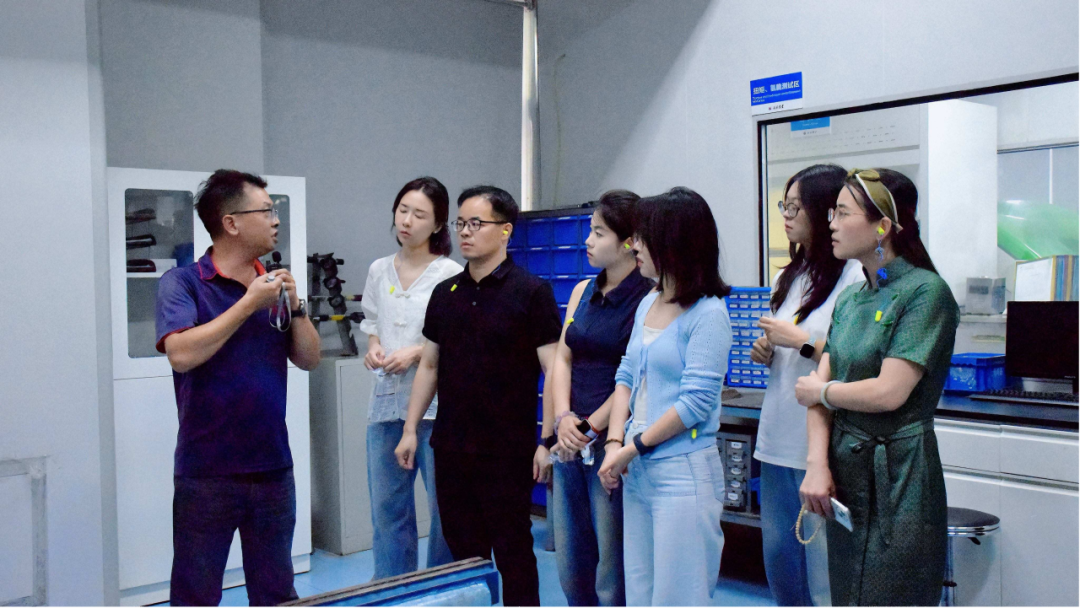
Figure 4. The research team observes a facility during the company visit.
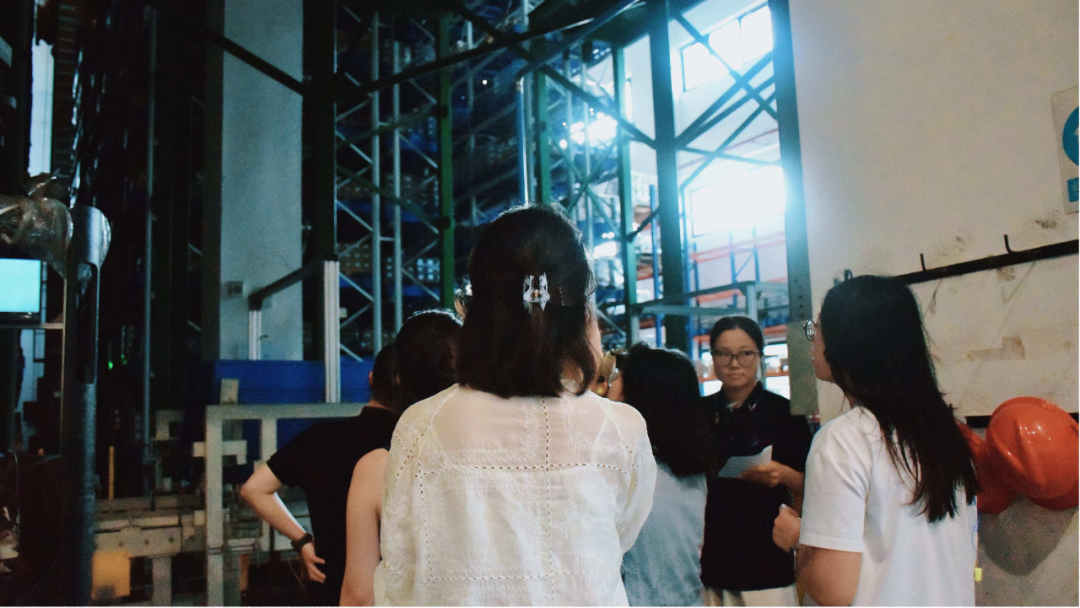
Figure 5. The team visits an automated warehouse.
4.Huapei: Going Global Means Sinking Products Down, Not Merely Selling to Customers at the Same Level
Finally, the team visited HUAPEI, a leading seller in eBay's auto and motorcycle parts category. Founder and CEO Jun Tu began the exchange with the team from the company's 17-year entrepreneurial history, covering topics such as business-model design and the logic of channel sinking.
Tu holds dual majors in law and international economics and trade, once worked at a German company, and has nearly twenty years of experience in the automotive aftermarket and overseas markets. In 2024 he started afresh in auto-parts cross-border e-commerce and, within 18 months, became an eBay annual million-seller. Tu believes that going global is not about reselling products made in Chinese factories to customers at the same level, but about sinking down. Chinese going-global companies have long lacked bargaining power, and the crux is that their channel capability has not sunk down. Based on this judgment, Huapei positions itself as an integration service provider for the upstream supply chain. He noted that the supplier is not necessarily the manufacturer: where the social division of labor is well developed and industry competition is sufficient, Huapei can always select the best partner from among many suppliers.
Speaking of the cost advantage of Chinese manufacturing, he cited the appearance-parts industrial belt in Changzhou and Danyang, where "mold making, injection molding, and painting are each handled by different entities, and the finished product may end up with a warehouse-type enterprise." In China, industrial collaboration is highly mature and concentrated in the same region, and the resulting efficiency and cost advantages are clearly competitive on a global scale.
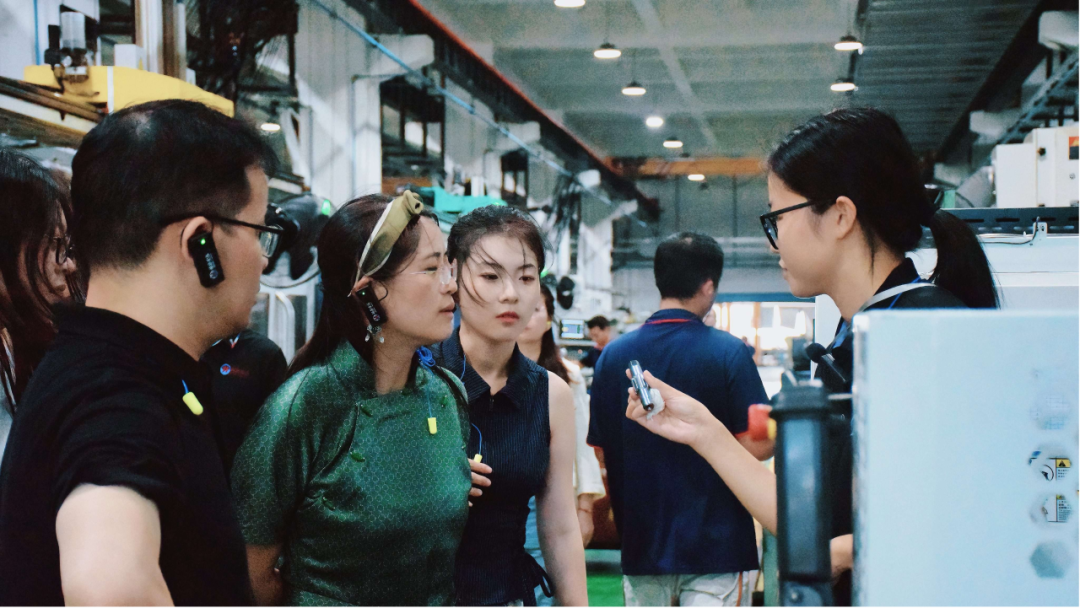
Figure 6. The research team holds a discussion on the shop floor.
5.Reflections from Participants
Yue Shi, a 2025 master's student in Business Administration (New Technology and Integrated Media Management), said: "After visiting four companies, I realized that strong foreign-language skills are certainly an advantage, but being able to understand and translate is not the whole job. You also need to understand the industry and be familiar with how local people communicate — things AI cannot do for us."
Wenjun Chen, a 2025 master's student in Business Administration (Consumer Behavior and Neural Decision), said: "This survey of cross-border e-commerce companies showed me not only the opportunities in cross-border e-commerce and going global, but also the real challenges in cross-cultural management, supply-chain building, and talent development. I now have a deeper understanding of how Chinese companies actually operate internationally."
Jingjing Zhang, a 2023 MBA graduate, said: "Chinese companies going global are no longer simply exporting goods, but extending their comprehensive strength outward. It is foreseeable that more and more Chinese companies will go abroad, take root across industries, and demonstrate their competitiveness and vitality in markets around the world."
SBM has continued to step up its support for enterprises going global. It has added the MBA tracks "Business Globalization and Global Commerce" and "International Culture and Tourism Management," released the 2025–2026 China Cultural Going-Global Trends Report, and signed a memorandum of cooperation on the "Yangfan Yunjian · Enterprise Listing and Going-Global Service Platform," deeply integrating into the building of a comprehensive overseas service system through high-quality talent supply and think-tank services.
Source: School of Business and Management; School Youth League Committee

